
Whiskey Glass Buying Guide for Bars, Retail, and Gift Sets

Choosing whiskey glasses is easier when the sales scenario is clear from the beginning. A glass that works well for bar service may look too plain for a retail shelf. A style that feels strong in a gift box may not be the most practical option for daily hospitality use.
That is why whiskey glass selection should not start with appearance alone. It should start with where the product will be used, how it will be presented, and what role it needs to play in the final program.
This guide looks at three common directions: bar and hospitality use, retail sale, and gift set presentation. Each route usually needs a different kind of whiskey glass.
Common Whiskey Glass Styles Used in Different Sales Scenarios
Whiskey glass selection usually starts with a few core style routes, but the right choice depends on how the product will actually be used and presented.
For broad commercial use, the most common starting points are rocks glasses, old fashioned glasses, double old fashioned glasses, and straight-sided whiskey tumblers. These styles are familiar to the market, easy to position across hospitality and general retail, and flexible enough for a wide range of projects.
For more niche concepts, buyers may consider Glencairn-style glasses, tulip-shaped tasting glasses, or other aroma-focused forms. These styles create a more category-specific look and are usually more suitable for specialty retail, tasting kits, whisky clubs, or limited gift concepts than for broad hospitality programs.
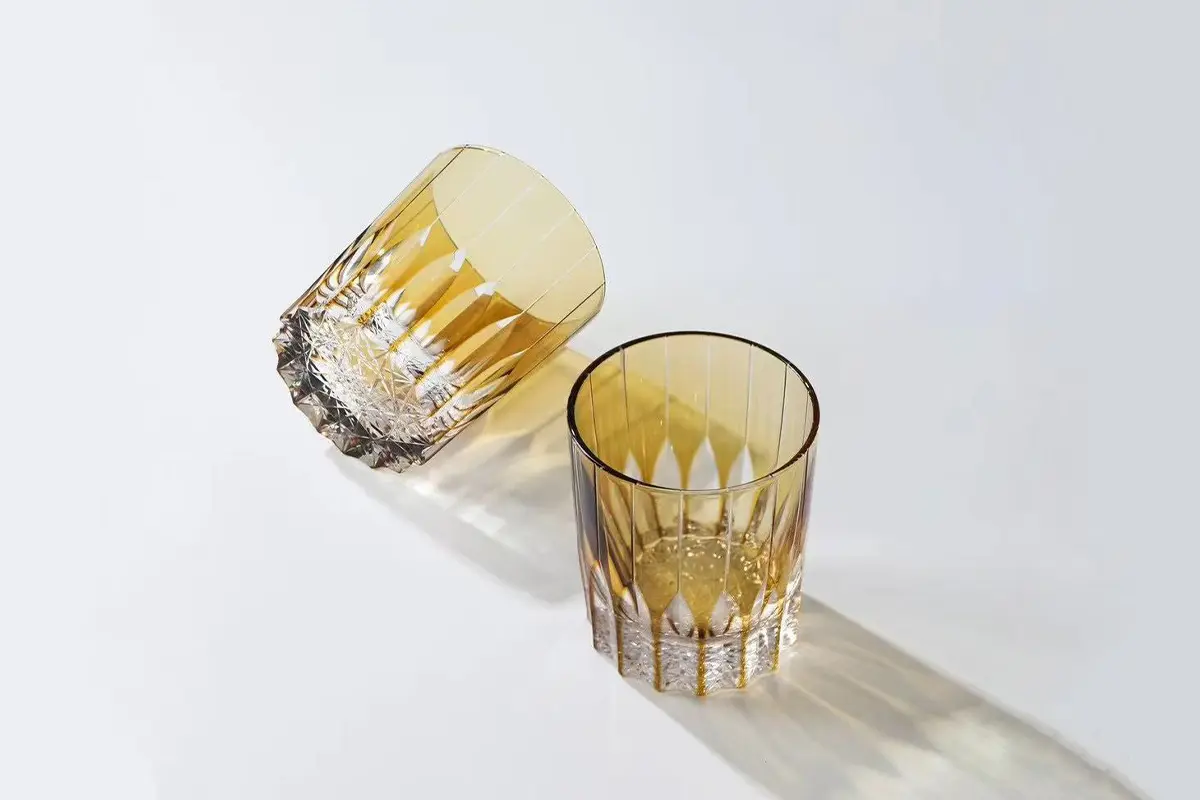
For premium retail and gifting, buyers often move toward heavy-base tumblers, cut-pattern whiskey glasses, square-profile glasses, or decanter-matching tumblers. These styles usually create stronger shelf presence and a more substantial visual feel, which makes them more suitable for boxed products and presentation-driven programs.
The key is not to choose the most complex style. It is to choose the style route that fits the sales scenario, product positioning, and level of presentation the project actually needs.
Whiskey Glasses for Bars, Restaurants, and Hotels
Bars, restaurants, and hotels all belong to the hospitality environment, but they do not always prioritize exactly the same thing. Even so, they usually have one shared requirement: the glass needs to work well in real service.
Bars usually need character without becoming too narrow
For bar programs, the glass should still feel right for whiskey service, but it should not become so niche that it limits future use or reordering. Common choices here often include rocks glasses, old fashioned glasses, double old fashioned glasses, and straight-sided tumblers.
These styles work well because they give enough whiskey identity without depending on a highly specialized concept. A bar can still create a stronger look through base thickness, silhouette, decoration, or color finish, while keeping the overall glass commercially practical.
Restaurants and hotels usually value broader service fit
Restaurants and hotels often take a broader operational view. Their focus is usually less on category-specific expression and more on consistency, practicality, and easy integration into the wider service system.
For this reason, straight-sided whiskey tumblers, standard old fashioned glasses, and more universal double old fashioned styles are often safer options than niche tasting glasses or highly decorative gift-oriented designs. These forms are easier to standardize and easier to continue over time.
Whiskey Glasses for Retail Programs
Retail projects follow a different logic. Here, the product is not only being used. It is being sold.
Retail usually needs stronger visual identity
A retail whiskey glass has to justify its place on a shelf or in an online catalog. Buyers are comparing more than use function. They are also comparing visual appeal, perceived value, and how clearly the product fits the intended product story.
This is why retail programs often lean toward heavy-base tumblers, double old fashioned glasses with stronger proportions, cut-pattern whiskey glasses, square-profile styles, or more defined silhouettes. These glasses usually create a stronger first impression than a basic service tumbler.
Standard service glasses can feel too generic in retail
A glass that works well in a hotel bar may still look too plain for retail sale. This is one of the biggest differences between hospitality and retail. Hospitality asks whether the glass works. Retail asks whether the glass looks strong enough to sell.
For example, a standard straight-sided tumbler may be practical for service, but a retail program may need something with more visual weight, more base definition, or a more distinctive shape to feel like a real product rather than a replacement glass.
Whiskey Glasses for Gift Set Projects
Gift set projects should usually be treated as a separate route, not just as a standard glass order with a box added later.
A gift set should be judged as a full product
In gift-oriented programs, buyers rarely evaluate one glass alone. They are usually judging the complete set: the glasses, the insert, the box, and sometimes the decanter.
For this reason, common styles in gift projects often include matching double old fashioned glasses, heavy-base tumblers, cut-pattern glasses, decanter-matching whiskey glasses, and in some niche concepts, tasting glasses paired as a set.
Matching style matters more than isolated appeal
A glass that looks acceptable by itself may not look right once it is placed beside a decanter or inside a rigid gift box. In gift sets, the buyer usually needs the glasses to match the visual weight, silhouette, and overall tone of the set.
This is why heavy-base glasses and decanter-matching tumblers often perform better in gift projects than lighter, more generic service styles. The set needs to feel complete, not just functional.
Single Glasses or Sets: Which Route Fits the Project
This is one of the most useful decisions to make early.
Single glasses usually fit hospitality use, general supply, and projects that need broader flexibility. They are easier to standardize and usually make more sense when repeat ordering and regular use matter most.
Sets usually fit retail and gift-oriented programs better. They create stronger presentation value, but they also require buyers to think about how the pieces work together rather than judging one glass alone.
In simple terms, single glasses are usually better for broad use, while sets are usually better for stronger presentation.
What to Compare Before Making the Final Choice
Before choosing a final whiskey glass direction, buyers usually compare:
- the main sales scenario
- the level of visual identity the product needs
- single-glass use or set-based presentation
- how easy the style will be to continue across reorders
- how the product will be experienced in use, on shelf, or in a gift box
These points help keep the decision tied to the project, not only to appearance.
Final Thoughts
The best whiskey glass is usually not the one that looks most impressive on its own. It is the one that fits the actual sales scenario.
Bars, restaurants, and hotels usually need glasses that are practical and repeatable. Retail projects usually need stronger visual identity. Gift sets usually need a more coordinated presentation route.
When the scenario is clear, style selection becomes much easier and usually leads to a stronger product decision.
Find the Right Whiskey Glasses for Your Market
Browse our Whiskey & Spirits Glasses collection for hospitality, retail, and gift-oriented programs. Compare commercial styles, gift-set options, and custom project possibilities in one place.


