
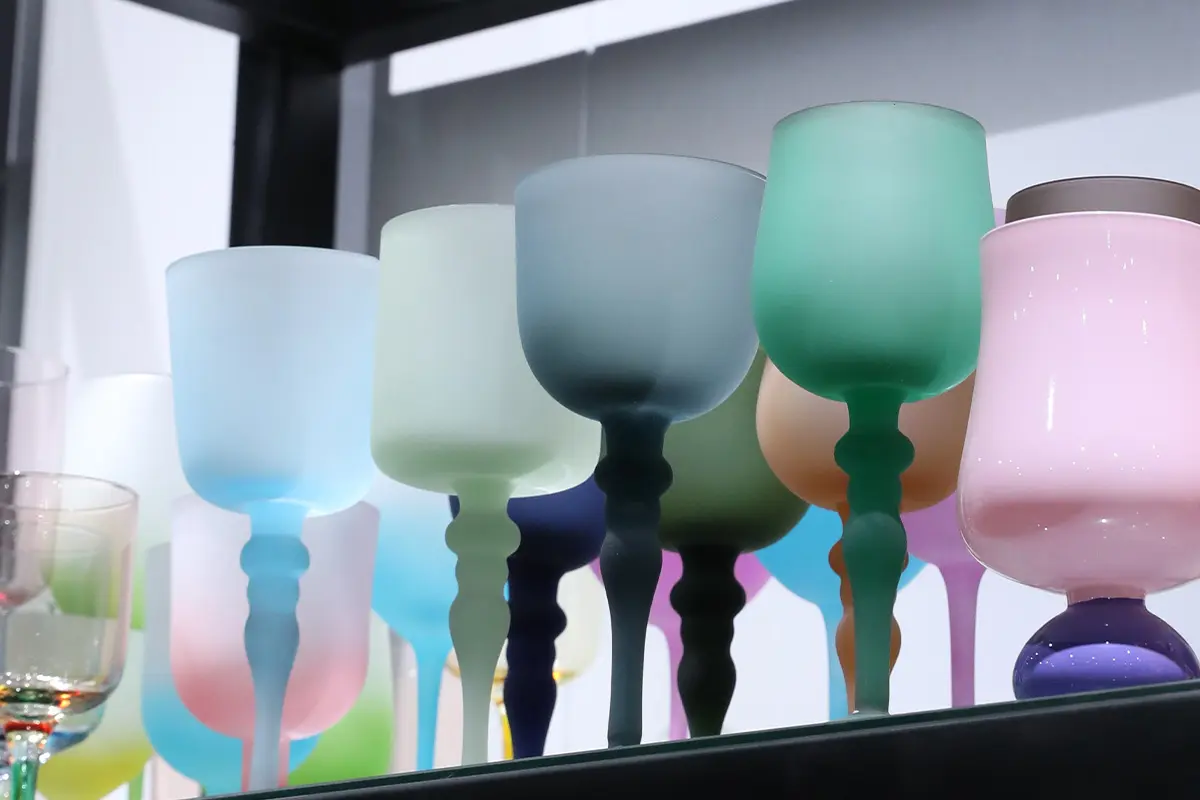
Lead Time for Custom Glassware: From Sample Approval to Production and Packing

Custom glassware lead time is not one fixed number because each project follows a different production route. Existing mold projects are usually easier to schedule, while new mold development often takes longer because it may involve trial samples, review, and revision. Sample changes, decoration, and custom packaging can also extend the timeline. That is why delivery time is usually assessed according to the actual project details rather than quoted as a standard number.
Typical Lead Time by Production Stage
For buyers, the more practical question is where time is most likely to be added after an order is confirmed. The table below shows where time is typically spent and why delivery timelines can vary even for similar-looking products.
|
Production Stage |
Typical Time |
Notes |
|---|---|---|
|
Sample preparation based on existing mold |
3-5 days |
Usually faster when the basic shape and tooling route are already established. |
|
New mold development |
Case by case |
Depends on design complexity, mold development, trial samples, and revision needs. |
|
Sample review and revision |
2–5 days |
If shape, size, rim, base, or decoration effect needs adjustment, extra time is needed. |
|
Production scheduling |
3–7 days |
Depends on the current production queue, order size, and product route. |
|
Mass production |
10–35 days |
Varies by product type, quantity, forming route, and quality requirements. |
|
Annealing and controlled cooling |
Included in production timeline(2-6 hour) |
This is a required post-forming stage, not an optional extra step. |
|
Cold-end processing and finishing |
3–7 days |
May include sorting, rim treatment, bottom treatment, polishing, or other finishing work depending on the product. |
|
Decoration and deep processing |
5–10 days |
Applies when logo printing, decal, spray color, gold rim, electroplating, frosting, or similar finishes are required. |
|
Inspection and packing |
3–7 days |
Includes final QC, count checking, packing confirmation, and shipment preparation. |
In practical terms, custom glassware lead time can be as short as 28 days for simpler projects and extend to around 3 months for more complex ones, depending on the mold route, revision needs, decoration, and packaging requirements.
What Happens During the Lead Time of a Glassware Order?
Sample Preparation
Sample preparation is the first practical stage after the project route is confirmed. For existing-mold projects, this step is usually more straightforward because the basic shape already exists. The main goal is to confirm dimensions, capacity, weight level, rim finish, and overall appearance.
For existing-mold projects, sample preparation often takes about 3–7 days. Clear glass samples are usually faster, while logo printing or other decoration may require additional time. If approval can be completed through photos or video, the project can move forward more quickly. If a physical sample needs to be shipped, international courier time should also be included, which typically adds another 3–4 business days depending on the destination.
New Mold Development
If the project needs a new mold, the lead time becomes less fixed. This is why new mold development should be treated as case by case rather than forced into one standard number.
The extra time is not only about making the mold itself. It also includes trial forming, evaluating the first result, and checking whether the shape, balance, wall distribution, and overall appearance are acceptable for mass production. In many projects, the first sample is only the starting point, not the final approval point.
Sample Review and Revision
This is one of the most underestimated reasons for lead time extension.
A project may look simple at the beginning, but once the first sample is reviewed, buyers often ask for changes to capacity, silhouette, height-to-diameter proportion, stem thickness, base stability, logo position, or decoration effect. These are normal project decisions, but each revision pushes the schedule back.
In real B2B glassware projects, repeated sample changes often affect the timeline more than buyers expect. That is why clear approval at the sample stage matters so much.
Glass Forming Is Only One Part of Production
Many buyers think that once the glass is formed, the main work is done. In reality, forming is only one stage of the production route.
The EPA’s overview of commercial glass manufacturing separates the process into forming and finishing, while published industrial process flows show that formed glass then moves into later stress-relief and handling steps before final inspection and shipment.
Annealing and Controlled Cooling
Annealing is one of the most important reasons glassware is not ready immediately after forming. Industry and museum sources describe annealing as slow, controlled cooling used to reduce internal stress and help prevent cracking or breakage. Britannica also notes that uncontrolled internal stress can make glass more vulnerable to failure.
This matters for lead time because annealing is not a decorative step that can be skipped when a schedule is tight. It is a necessary production stage. In practical terms, it means formed glassware still needs time to stabilize before it moves to later finishing, inspection, and packing.
Cold-End Processing and Finishing
After annealing, glassware may still need post-forming work before it is ready for shipment. Depending on the product route, this can include visual sorting, rim treatment, bottom treatment, polishing, or other finishing operations.
That is why “production” should not be understood as glass forming only. Manufacturing references for glass broadly distinguish forming from finishing, and in industrial process flows, inspection and packing come after these later stages, not immediately after the forming machine.
Decoration and Deep Processing
For many custom projects, the lead time is strongly affected by what happens after the clear glass body is finished.
Logo printing, decals, spray color, gold rim, electroplating, frosting, sandblasting, and similar surface finishes add extra process coordination. Even when the glass body itself is ready, decoration can still extend the timeline because the buyer may need visual confirmation of color, placement, edge cleanliness, or branding effect before the order moves forward.
This is why a plain clear glass project and a decorated project should never be treated as having the same production route.
Inspection and Packing
Final inspection and packing are also part of real lead time.
At this stage, the factory is not simply counting cartons. It is checking appearance, finish consistency, decoration quality when applicable, quantity accuracy, and packing readiness. For projects with custom gift boxes, retail boxes, labels, inserts, or more detailed export packing requirements, this stage can become more time-sensitive.
Why Existing Mold and New Mold Projects Follow Different Timelines
Existing Mold Projects Usually Move Faster
Existing mold projects usually have a shorter and more predictable route because the basic structure has already been developed. Sample preparation is more straightforward, product risk is lower, and there are fewer unknowns before mass production.
This does not mean existing mold projects are always fast. Decoration, custom packaging, or repeated sample changes can still affect the schedule. But compared with full development work, existing mold projects are usually easier to move into production.
New Mold Projects Need a More Flexible Timeline
New mold projects need more schedule flexibility because the project is still being developed, not simply executed.
The main difference is uncertainty. Buyers are not only approving a sample. They are also approving whether the new design can be produced consistently and whether the result matches the intended shape, use scenario, and market positioning. That is why new mold projects need more buffer in the timeline.
What Can Extend Glassware Lead Time?
New Mold Requirements
This is the biggest variable in many custom projects. Once a new mold is required, the project has to pass through development and validation steps that are not part of a standard existing-mold route.
Multiple Sample Revisions
Repeated changes after the first sample often extend the project more than the buyer initially expects. Even small adjustments can require another confirmation cycle before mass production is released.
Annealing, Finishing, and Post-Processing Requirements
Glassware is not finished the moment it leaves the forming stage. Annealing is required to reduce internal stress, and later finishing steps still take time before the product is ready for inspection and packing. This is one reason lead time should be discussed as a full production route rather than as forming time only.
Decoration Complexity
Simple one-position logo work and more complex decorative routes are not the same. The more detailed the finish requirements, the more coordination the project usually needs.
Custom Packaging Requirements
Gift boxes, retail-ready packaging, inner protection, labels, barcodes, and export-carton requirements all add work after the product body itself is completed. This is especially important when packaging is part of the commercial presentation, not just shipment protection.
Production Scheduling During Peak Periods
Even a technically simple product still has to fit into the live factory schedule. Seasonal demand, large running orders, and pre-holiday production pressure can all affect when an order is released into mass production.
External Delays Beyond Production
For international orders, buyers should also leave room for holiday closures, customs inspection, and logistics disruption. These are not the same as factory lead time, but they still affect the total order planning window.
How Buyers Can Plan Better and Reduce Delays
Confirm Specifications Clearly Before Sampling
The clearer the project is at the beginning, the easier it is to move through sample approval and production. Buyers should confirm the main direction for size, capacity, material, decoration, and packing before pushing the project forward.
Decide Early Whether an Existing Mold Can Be Used
This is one of the most useful early decisions in a custom glassware project. If the target product can be achieved through an existing mold route, the schedule is usually easier to control.
Reduce Repeated Sample Changes
Sample changes are normal, but repeated changes slow the project down. It is better to review the sample carefully once than to adjust the project many times in small steps.
Confirm Decoration and Packaging Together
A common mistake is to confirm only the glass body first and then spend too much time later on logo position, finish effect, or packaging direction. In practice, these decisions are connected and should be discussed together.
Allow Enough Time for Production and Post-Processing
Buyers should leave time not only for mass production, but also for annealing, finishing, decoration, inspection, and packing. That is the more realistic way to plan a glassware order.
Plan Orders Based on a Realistic Production Window
A better purchasing habit is to plan backward from the required delivery window, not from the ideal production speed. This is especially important for seasonal launches, hospitality openings, promotional projects, and custom gift programs.
How We Support More Reliable Lead Time Control
Clear Evaluation of Existing Mold and New Mold Routes
We help buyers assess early whether a project can move through an existing mold route or whether it needs new mold development. This helps reduce avoidable delays caused by choosing the wrong project path at the start.
Better Coordination Across Production, Decoration, and Packing
We do not treat lead time as one number with no structure behind it. A more reliable schedule comes from coordinating sample approval, production, decoration, and packing as one connected workflow.
Realistic Timeline Evaluation Instead of Overpromising
A responsible supplier should not report an attractive lead time first and solve the problems later. We prefer to evaluate the route more honestly so buyers can plan with fewer surprises.
Support for More Predictable Project Planning
For buyers working on wholesale programs, hospitality supply, retail collections, or custom branding projects, predictable planning is usually more valuable than a vague promise of speed. Stable execution is what helps a project actually ship on time.
Plan Your Glassware Order With a More Realistic Timeline
A workable lead time starts with a clear product route. If buyers already know the general shape direction, quantity, decoration requirements, and packaging needs, it becomes much easier to evaluate a realistic schedule.
If you are planning a custom glassware project, the most useful next step is to review whether an existing mold can meet the target, what level of sample confirmation is needed, and which stages after forming still need to be included in the timeline. That is usually where better delivery planning begins.


