Glassware MOQ Guide: What Affects MOQ for Custom and Wholesale Order

Many buyers ask about MOQ at the very beginning of a glassware project, especially importers, wholesalers, hospitality buyers, and brands developing custom drinkware. However, glassware MOQ, or minimum order quantity, is not one fixed number for every order.
Quick Answer
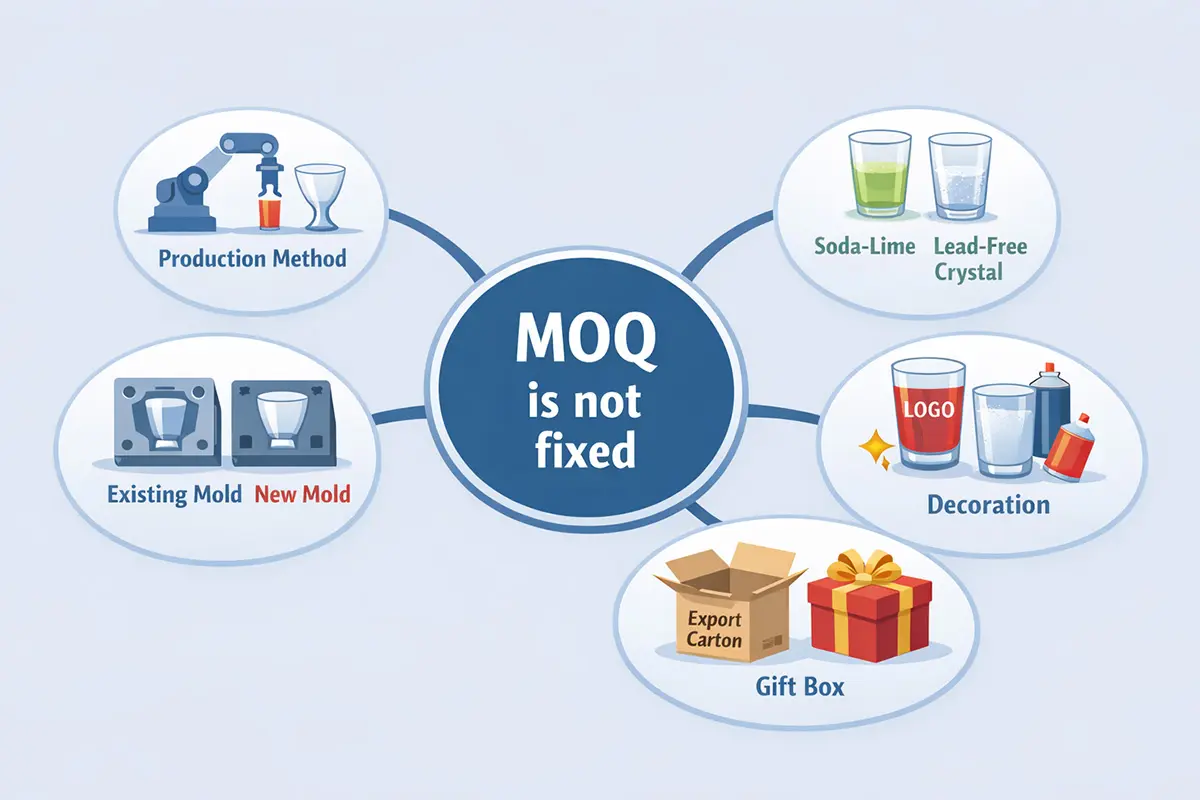
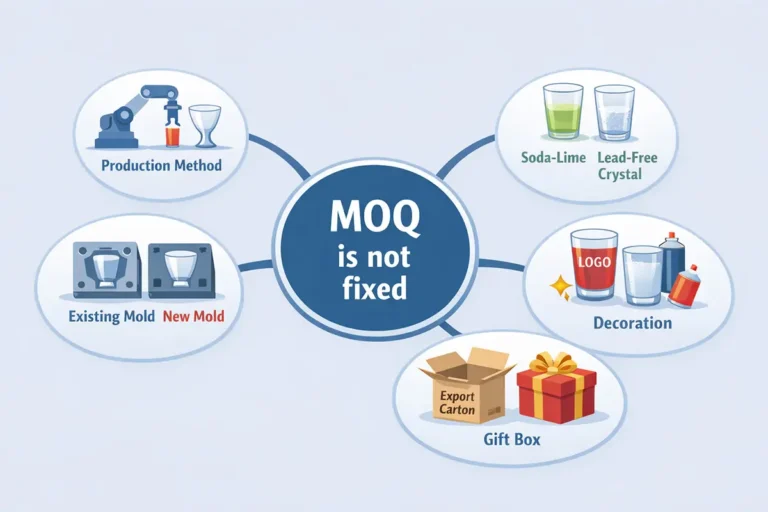
Glassware MOQ is usually not fixed. For most custom and wholesale projects, it mainly depends on production method, material, mold route, decoration, and packaging.
In OEM projects, these differences usually come from the customization route behind the product. Our OEM glassware customization service shows the main options that can affect MOQ, including material, decoration, and packaging.
Why Glassware MOQ Is Not Always Fixed
Two glasses may look similar in photos, but the production route behind them can be very different. One project may use an existing mold with plain export packing, while another may require a new mold, color decoration, and custom gift box packaging. Even if the products look close, the MOQ may be very different because the setup cost and production requirements are not the same.
Production Method Can Affect MOQ and Cost
In many OEM glassware projects we handle, production method is one of the first factors that changes both MOQ and pricing.
Machine-made glassware is a better fit for larger orders
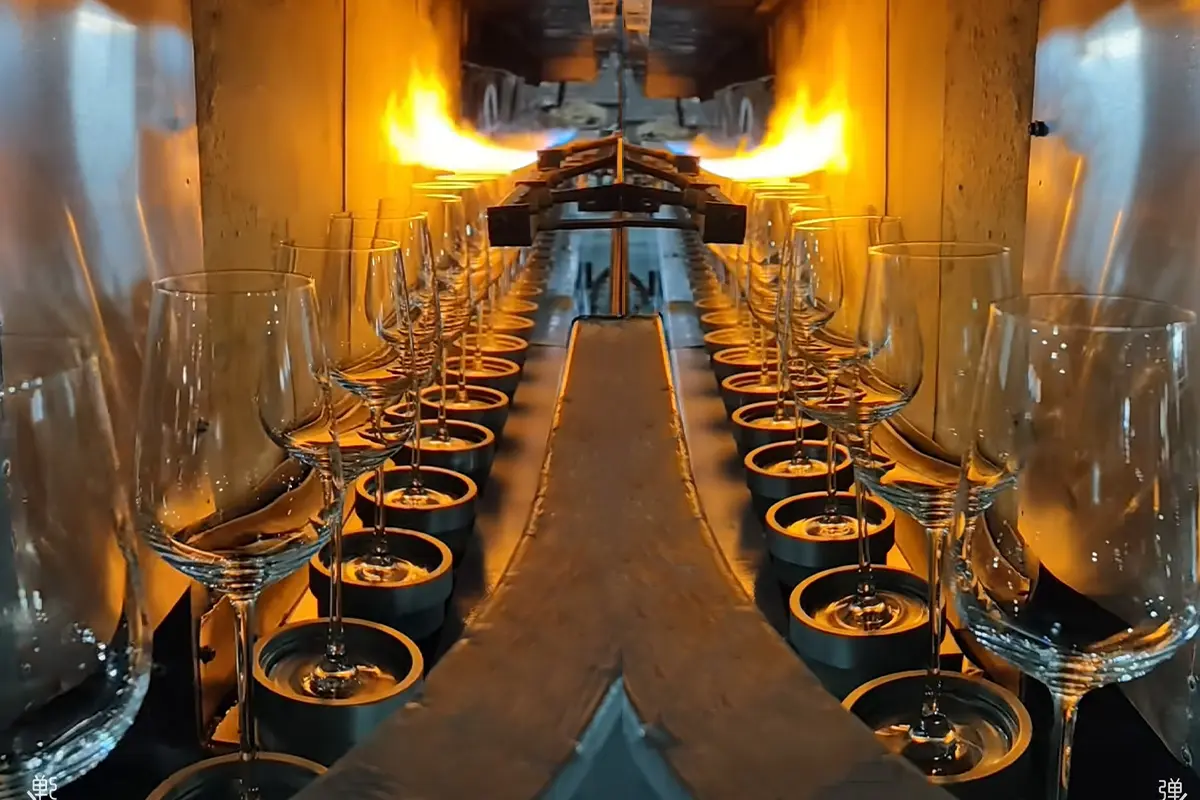
Machine-made glassware is more suitable for larger orders because the production system is designed for scale, faster output, and more consistent results. For standard wholesale items, this often makes it the more economical option at higher volumes.
This is primarily driven by cost-saving considerations. Frequent replacement of production tools such as feeders, feed bowls, punches, clamps, and molds significantly increases costs, while temperature adjustments and system debugging can also affect order delivery. If order volumes are too low, frequent changeovers can reduce efficiency, affect consistency, and make the production plan less practical.
Handmade glassware is often a better fit for smaller runs
Handmade glassware is often a better fit for smaller runs because the production process is more flexible. Compared with machine-made production, hand-blown glassware usually requires less setup when changing from one cup shape to another, and in many cases, changing the mold is enough to start the next style.
However, handmade production is more labor-intensive and is often used for glassware with thinner walls and a more refined finish. As a result, a lower MOQ does not necessarily mean a lower unit price. If you want to understand these differences in more detail, you can also read how glass cups are manufactured.
Material Choice Can Also Affect MOQ
Material choice also affects MOQ, but not as an isolated factor. In most cases, the real impact comes from how the material is matched with the production method, cost level, and order quantity.
Soda-lime glass is commonly used for cost-driven volume orders
Soda-lime glass is commonly used in standard wholesale drinkware because it works well with machine production and helps keep unit cost lower at higher volumes.
If the same material is used in hand-blown production, labor cost can increase significantly. In that case, the usual cost advantage of soda-lime glass becomes much less obvious.
Lead-free crystal offers more flexibility, but the cost structure changes
Lead-free crystal can be produced through either machine-made or handmade methods, so it offers more flexibility in production planning.
Machine-made lead-free crystal offers better consistency and a lower unit price, but it typically comes with a higher MOQ. Handmade lead-free crystal is more flexible in quantity planning, though the unit cost is higher.
Existing Mold vs New Mold
Whether a project uses an existing mold or requires a new one also affects MOQ, but it is not a standalone rule.
Projects based on existing molds are easier to start because the shape, sampling process, and production route are already in place. This often helps reduce development time and upfront work.
A new mold adds extra cost and development steps, but it does not automatically mean the MOQ must be high. Buyers may still start with a smaller quantity if the overall setup cost is acceptable. The better way to evaluate this is to look at mold cost, production method, target quantity, and total project budget together.
Decoration and Packaging Can Increase MOQ
For many custom projects, the glass itself is only part of the order. Decoration and packaging also affect the minimum order quantity.
Custom decoration often changes the minimum quantity requirement
Plain clear glass is easier to start than decorated glassware. Once a project includes logo application or special finishes, MOQ often changes depending on the decoration method and process setup.
Typical decoration options include decal logo application, screen printing, frosting, spray color, gold rim, and other custom finishes. Some of these methods require batch setup, color matching, film preparation, or extra process control. That is why MOQ for logo printed glassware may be different from MOQ for plain stock glassware.
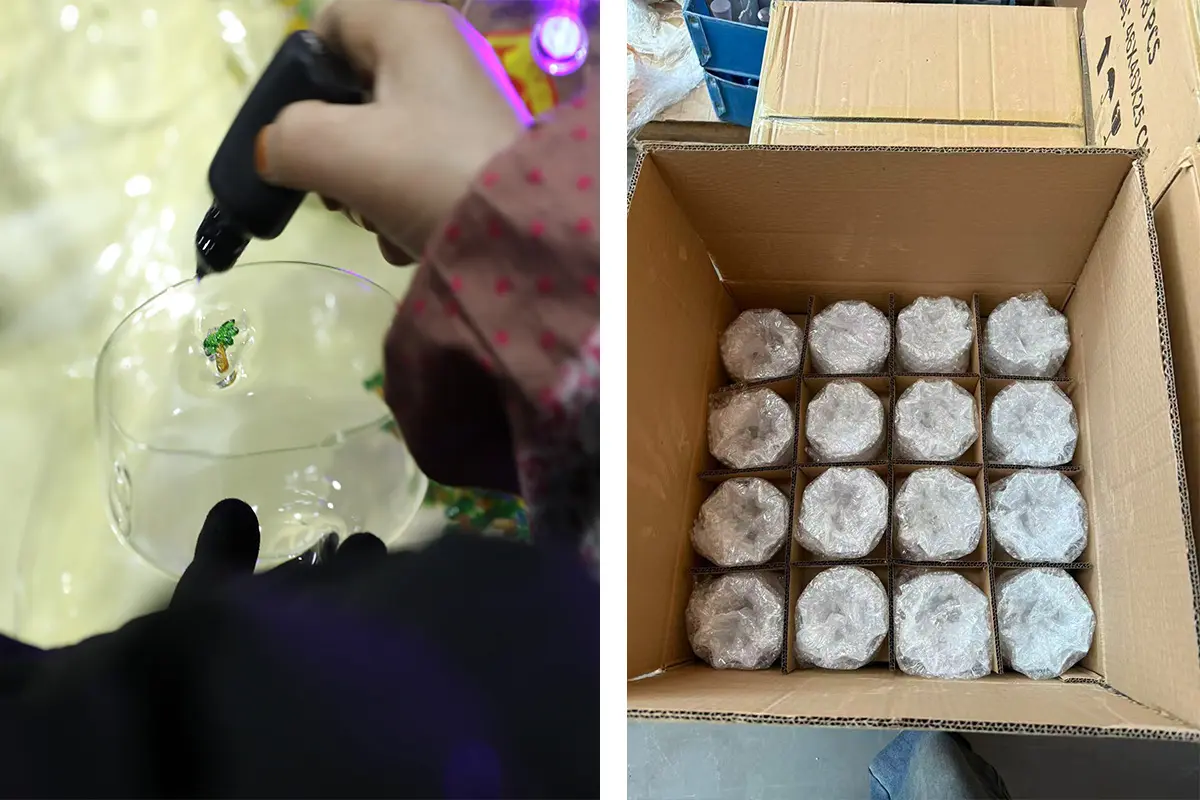
Custom packaging often has its own MOQ
Packaging is not just a secondary detail in a glassware project. In many cases, it can set the practical starting quantity earlier than the glass itself. Standard export cartons are the easier route for wholesale orders, but retail boxes, gift boxes, inner boxes, barcode labels, and other custom packaging formats may create their own MOQ.
This is because custom packaging often comes with separate setup work, supplier requirements, and cost expectations. In many projects, the glass itself remains workable at a lower quantity, while the box supplier sets the real minimum.
For smaller-quantity projects, it is usually more practical to keep both logo decoration and packaging simple. Once the project moves into more complex printing methods or custom gift box packaging, MOQ is often driven by the decoration or packaging route rather than the glass itself.
How to Evaluate the Most Practical MOQ Route
For buyers testing a market first, MOQ is often not the only issue. The more practical question is which production route makes sense for the order.
|
Evaluation Question |
Why It Matters |
MOQ Implication |
|---|---|---|
|
Can an existing mold already match the target style? |
It reduces development work and shortens the starting process. |
Usually easier to start |
|
Is the priority a lower starting quantity or a lower unit cost at volume? |
Different priorities often require different production routes. |
Smaller start vs better scale pricing |
|
Is the decoration requirement simple or highly customized? |
More decoration usually means more steps and setup work. |
More customization can raise the threshold |
|
Is the project for market testing or for a full retail launch? |
Project stage affects the right sourcing route. |
Testing usually favors a simpler route |
|
Which part of the project is actually setting the threshold? |
The main limitation may not come from the glass itself. |
Mold, decoration, or packaging may decide MOQ |
These questions become clearer when viewed as actual project routes:
- Existing mold + simple decoration + standard export packing is usually the more practical starting point.
- Existing mold + custom color finish + retail-style gift box may still push MOQ higher, even when the glass itself is easier to arrange.
- New mold + hand-blown production does not always require a very high quantity, but the total setup cost is usually higher.
What Buyers Should Prepare Before Asking for MOQ
The more complete the project information is, the easier it is to recommend a suitable MOQ and production route. Before asking for a quotation or MOQ recommendation, buyers should ideally prepare the following details:
- target glass style
- capacity
- dimensions if available
- material preference
- production method preference if any
- logo or decoration requirement
- packaging type
- estimated order quantity
- target market or sales channel
A buyer who only asks for “MOQ for a glass cup” will usually receive a broad answer. A buyer who provides the actual project requirements will usually receive a much more practical recommendation. This saves time on both sides and helps the supplier evaluate the project more accurately from the beginning.
FAQ About Glassware MOQ
MOQ is not fixed for all custom glassware projects. It usually depends on the production method, material, mold route, decoration, packaging, and order quantity.
In many cases, yes. Existing molds, simple decoration, and standard export packing usually make small-quantity projects easier to start.
Often yes. Machine-made glassware is usually more suitable for larger-volume orders, while handmade production can be more flexible for smaller runs but comes with a higher unit cost.
It can. Retail boxes, gift boxes, and other custom packaging formats may have their own minimum quantity requirements.
A practical route is usually an existing mold, simple logo decoration, and standard export carton packing. This helps keep both MOQ and setup cost under better control.
Conclusion
In practice, MOQ is easier to evaluate when the project route is clear from the beginning, rather than discussed as a single number without enough product and packaging details. Factors such as existing molds, new mold development, production method, material preference, decoration, packaging, and order planning can all affect the final minimum order quantity.
Need Help Evaluating Glassware MOQ?
If you are planning a custom or wholesale glassware project, send us your project details, and we will help evaluate a suitable MOQ and production route.


