
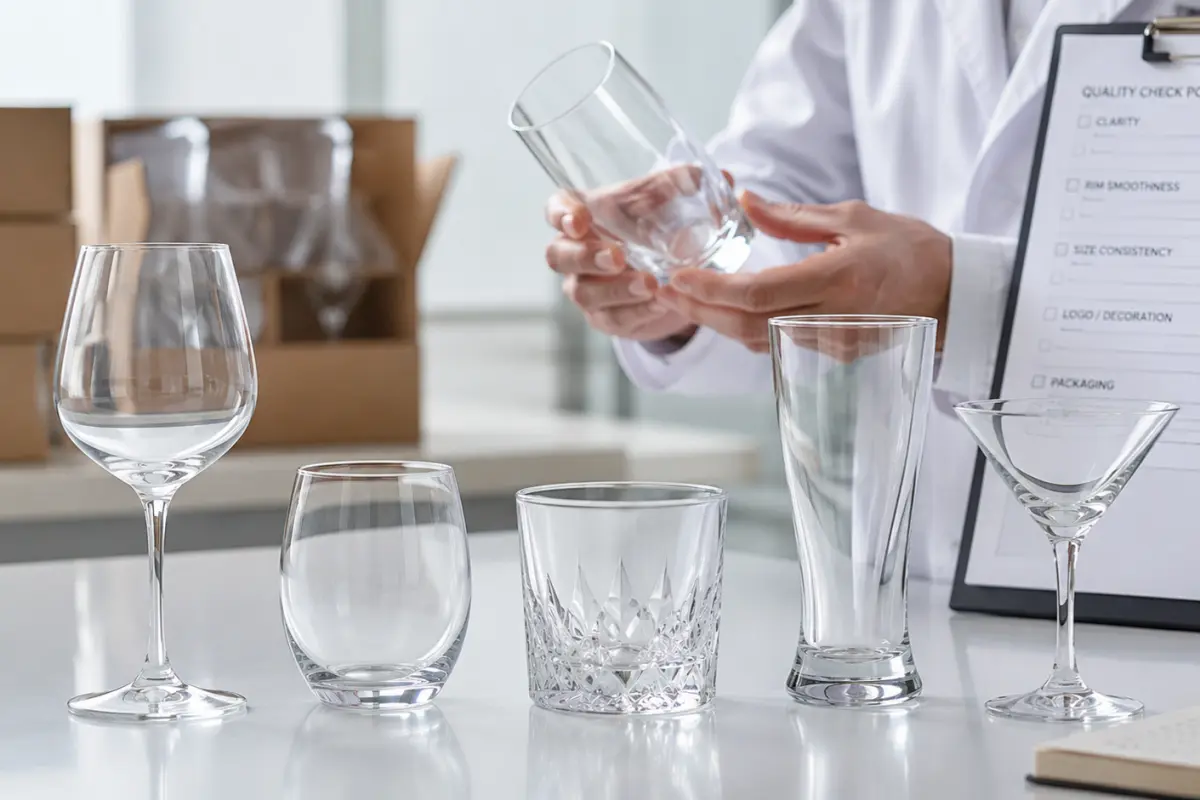
How to Check Glassware Quality Before Placing a Bulk Order

Quick Answer
Before placing a bulk glassware order, buyers should check glassware quality by confirming the approved sample, specification sheet, artwork file, packaging plan, and acceptable tolerance. The main checks include visible glass defects, rim smoothness, capacity consistency, decoration accuracy, and export packaging protection. Clear confirmation before mass production helps reduce breakage risk, logo mismatches, and quality disputes.
For importers, wholesalers, hospitality suppliers, and private-label brands, glassware quality is not only about whether the product looks good in photos.
A glass cup may look acceptable at first glance, but problems often appear in the details: visible bubbles, black spots, rough rims, unstable bases, inconsistent capacity, weak packaging, or logos that do not match the approved artwork.
Before mass production starts, buyers need a clear reference standard. This article explains five practical quality checks to review before placing a bulk glassware order. For a broader supplier evaluation process, you can also read our guide on how to choose a reliable glassware manufacturer in China.
|
Quality Check |
What Buyers Should Confirm |
|---|---|
|
Glass appearance |
Clarity, bubbles, scratches, black spots, cracks, and deformation |
|
Rim quality |
Smoothness, thickness, chips, sharp edges, and drinking comfort |
|
Size and structure |
Capacity, height, diameter, weight, wall thickness, and base stability |
|
Decoration |
Logo position, color, clarity, alignment, and decoration finish |
|
Packaging |
Inner box, dividers, carton strength, gift box, and palletizing method |
1. Check Glass Appearance and Visible Defects
Glass appearance is the first quality area buyers should check because it affects product presentation, safety, and brand value.
Before confirming a bulk order, buyers should inspect the approved sample under good lighting. Visible defects can usually be checked in three areas:
- Surface clarity: large air bubbles, black spots, stones, scratches, dirty marks, or uneven color
- Structure and safety: cracks, sharp edges, obvious deformation, unstable shape, or defects near the drinking rim
- Production marks: minor bubbles, mold marks, or handmade variations caused by the glass forming process
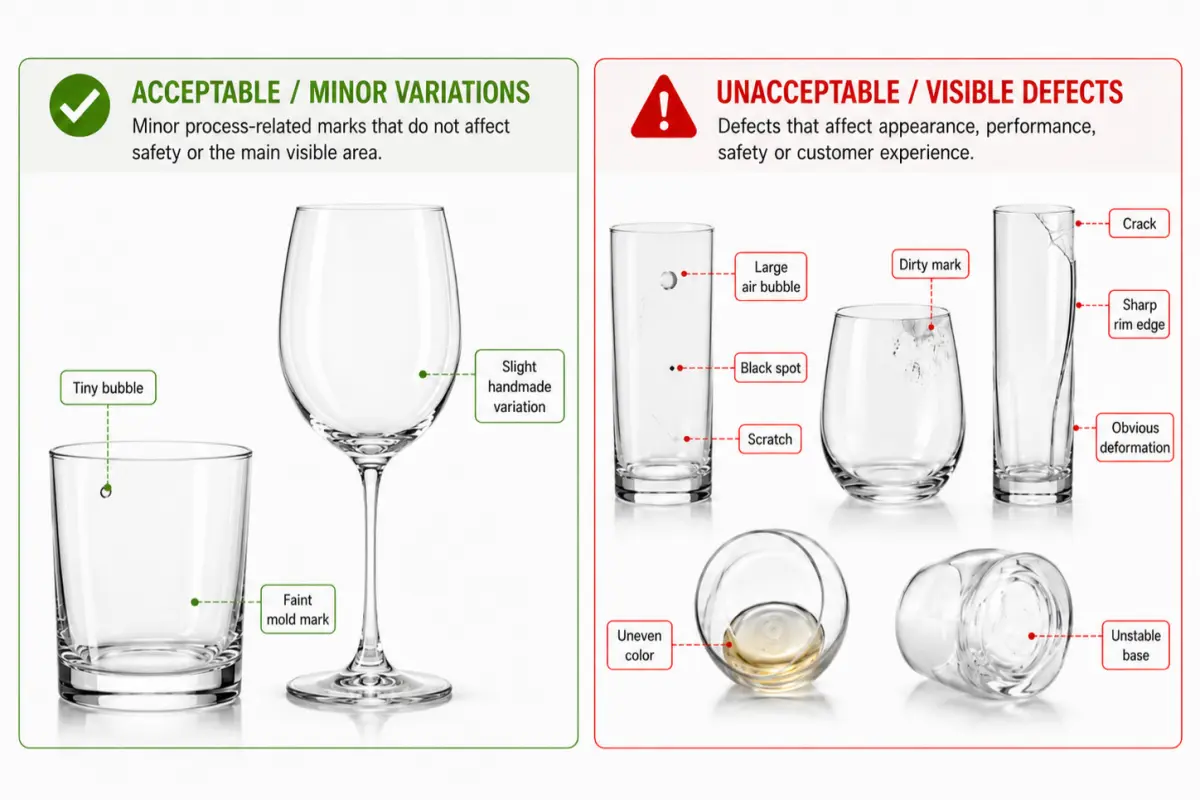
Buyer Tip: Minor bubbles, mold marks, or handmade variations are not always unacceptable. The key is whether they affect safety, drinking comfort, the logo area, or the main visible surface. Confirm the acceptable defect standard with your supplier before production starts.
2. Check Rim Smoothness and Drinking Comfort
Rim quality directly affects safety, drinking comfort, and the perceived value of the glass.
Even if a glass has a clear body and attractive shape, a sharp, rough, chipped, uneven, or overly thick rim can make the product feel lower in quality.
Buyers should check rim quality in three areas:
- Safety: no chips, cracks, sharp edges, or rough marks near the drinking rim
- Consistency: stable rim thickness, even shape, and no obvious deformation
- Drinking comfort: a smooth rim finish that matches the intended use and product positioning
For wine glasses, cocktail glasses, and premium hospitality glassware, the rim usually needs to feel more refined. For beer glasses, tumblers, and daily-use water glasses, the rim should balance comfortable drinking with enough strength for regular use.
If rim finish is important to the product positioning, buyers should confirm it with a real sample instead of relying only on photos.
3. Check Capacity, Size, Weight, and Stability
Capacity, size, weight, and stability should be confirmed before bulk production because small differences can become costly when repeated across thousands of pieces.
Buyers should check these details in four areas:
Capacity: full capacity and recommended serving capacity
Dimensions: height, top diameter, bottom diameter, wall thickness, and bottom thickness
Weight: glass weight and whether it matches the product positioning
Stability: whether the base stands firmly on a flat surface without wobbling
Capacity is especially important for beer glasses, wine glasses, cocktail glasses, and hospitality drinkware. Buyers should confirm whether the stated capacity means full capacity or recommended serving capacity, because drinks often need space for foam, ice, garnish, or aroma release.
Weight also affects product positioning. A glass that is too light may feel less durable, while a glass that is too heavy may increase shipping costs or reduce user comfort. For whiskey glasses and heavy-bottom tumblers, weight can also influence the perceived value of the product.
Stability should not be ignored, especially for stemware, cocktail glasses, and barware used in restaurants, hotels, or bars. The glass should stand firmly on a flat surface without obvious wobbling.
Buyer Tip: Machine-made glassware usually has better dimensional consistency, while hand-blown glassware may have slight variation in size, weight, or wall thickness. These tolerance expectations should be confirmed before production, not after delivery.
4. Check Logo, Decoration, and Surface Finish
For custom glassware orders, decoration quality should be treated as part of the product standard.
A clear glass body is not enough if the logo is printed in the wrong position, the color is inconsistent, or the decoration does not match the approved artwork.
Buyers should check decoration quality in four areas:
Logo accuracy: logo size, position, color reference, and artwork match
Printing quality: printing clarity, edge sharpness, alignment, and color consistency
Surface finish: frosted, etched, sprayed, gold rim, or color rim effect
Durability: surface scratches, decoration adhesion, and washing performance
Different decoration methods have different results. Screen printing is often used for simple logos and larger quantities, while decal printing can handle more complex designs. Laser engraving and etching create a more subtle premium effect, and gold rim or color rim decoration requires careful inspection for consistency.
Buyer Tip: Artwork on a computer screen does not always show how the decoration will look on curved glass. For logo-printed glassware, buyers should confirm the real sample, logo position, color reference, and decoration method before bulk production. If frequent washing is required, decoration durability should also be discussed in advance.
5. Check Packaging Protection Before Production
Packaging should be confirmed before production because glassware can still be damaged even when the product itself is well made.
Broken goods, crushed cartons, scratched surfaces, and damaged gift boxes can all affect the final customer experience. For export orders, packaging is not only a cost item. It is also part of the quality control process.
Buyers should check packaging in four areas:
Packing method: bulk packing, individual box, gift box, or retail-ready packaging
Inner protection: dividers, egg-crate protection, inserts, or extra protection for fragile parts
Outer carton: carton strength, carton size, carton weight, and carton marks
Shipping arrangement: palletizing method and protection for long-distance transportation
Different glassware types need different packaging solutions. Stemware, wine glasses, champagne glasses, and thin-wall cocktail glasses usually need stronger protection around the rim, bowl, stem, or foot. Heavy-bottom tumblers and whiskey glasses need attention to carton weight and impact protection. Gift sets require both protective packaging and good presentation.
Buyers should also confirm whether the packaging is designed for retail display, e-commerce delivery, hospitality use, or bulk wholesale distribution, because these scenarios may require different packaging structures.
If the packaging includes custom boxes, labels, barcodes, inserts, or branded artwork, these details should be confirmed before production starts.
Final Checklist Before Placing a Bulk Glassware Order
Before mass production starts, buyers should confirm:
- Approved sample
- Product specifications
- Acceptable defects and tolerance
- Logo artwork and decoration method
- Packaging details
- MOQ and lead time
- Payment terms and shipping terms
In real export orders, many problems come from unclear sample approval, packaging changes, logo color differences, or tolerance expectations. Confirming these details before production helps both the buyer and supplier work from the same standard.
Conclusion
Glassware quality control is not only about finding visible defects. It is about confirming a clear standard before production starts.
A reliable glassware manufacturer should help buyers review the sample, specifications, decoration, packaging, and quality requirements in advance. If you are planning a custom or wholesale glassware order, Everlucent can help review your requirements and recommend suitable production, decoration, and packaging solutions.
Need Help With a Custom Glassware Order?
Share your glassware requirements with Everlucent. We can help review the sample details, logo decoration, packaging method, and quality expectations before bulk production.
FAQ
The main quality checks include approved sample confirmation, visible defect inspection, rim smoothness, capacity and size consistency, logo decoration quality, packaging protection, and agreed quality standards before mass production.
Buyers should check the shape, capacity, size, weight, rim smoothness, glass clarity, base stability, logo position, decoration effect, and packaging method. For custom glassware orders, the approved sample should be used as the reference for mass production.
Small bubbles may appear in some glass production processes, especially in certain handmade or thick-bottom glassware. However, large bubbles, black spots, cracks, sharp edges, and obvious defects in the drinking area or logo area should be carefully controlled.
The rim directly affects drinking comfort and safety. A rough, sharp, chipped, or uneven rim can make the glass feel low quality and may create complaints, especially for wine glasses, cocktail glasses, hospitality glassware, and premium drinkware.
Yes. Packaging should be confirmed before production, especially for fragile glassware, gift boxes, custom labels, retail packaging, or export orders. Strong packaging helps reduce breakage and protects the product during shipping.
Buyers can reduce disputes by confirming the approved sample, specification sheet, artwork, decoration method, packaging structure, and acceptable quality standards before mass production. Clear confirmation helps both the buyer and supplier work from the same standard.


