
Soda-Lime vs Borosilicate vs Crystal: Which Glass Material Is Best for Drinkware

Best glass material for drinkware: quick answer
There isn’t one “best” glass for every product. The right choice depends on how the drinkware will be used, the target price range, and the look you want to create.
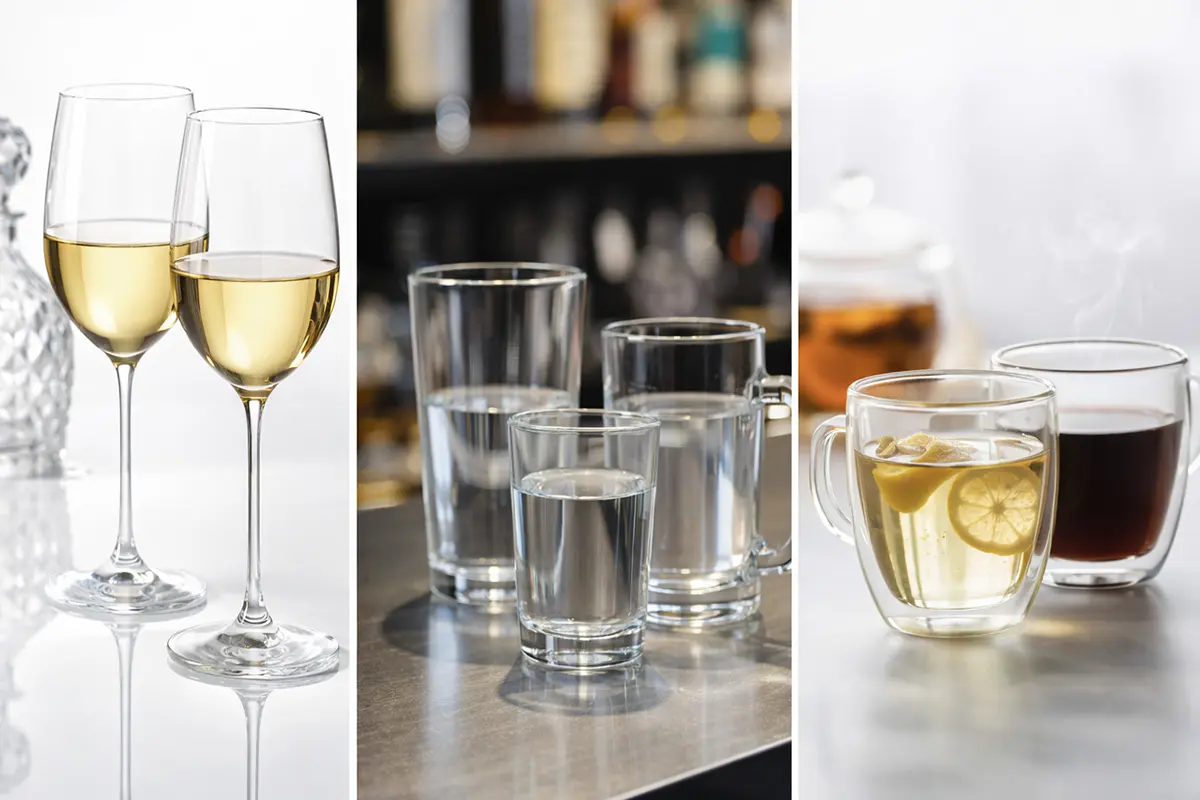
- Soda-lime glass: best value for everyday drinkware, tumblers, beer glasses, and large-volume production
- Borosilicate glass: best for hot drinks, tea glasses, coffee cups, and products exposed to temperature changes
- Lead-free crystal glass: best for wine glasses, whiskey glasses, premium barware, and gift sets
For most buyers, the decision comes down to three things: cost and durability, heat resistance, and visual appeal. Soda-lime glass is practical and affordable, borosilicate glass performs better with heat, and lead-free crystal gives drinkware a more premium appearance.
Soda-Lime vs Borosilicate vs Lead-Free Crystal: Quick Comparison
|
Factor |
Soda-Lime Glass |
Borosilicate Glass |
Lead-Free Crystal Glass |
|---|---|---|---|
|
Common use |
Everyday glasses, tumblers, beer glasses |
Coffee cups, tea glasses, double-wall glasses |
Wine glasses, whiskey glasses, premium barware |
|
Main strength |
Cost-effective for daily use and large orders |
Better for heat and temperature changes |
Premium clarity, brilliance, and refined appearance |
|
Heat resistance |
Low to moderate |
High |
Low to moderate |
|
Appearance |
Clear and practical |
Clear and clean-looking |
Bright, sparkling, and refined |
|
Cost |
Low |
Medium to high |
High |
|
Best for |
Bulk drinkware and price-sensitive projects |
Hot drinks and double-wall drinkware |
Gift sets, hospitality, and premium collections |
|
Main limitation |
Avoid sudden temperature changes |
Higher unit cost |
Needs better packing and handling |
The table gives a quick overview. Below, we’ll look at each option in more detail, including where it works best and what to consider before choosing it.
Soda-Lime Glass — affordable everyday choice
Soda-lime glass is the most common glass used for drinkware worldwide. It offers good clarity, practical durability, and lower production cost, making it suitable for everyday drinkware and large-volume production.
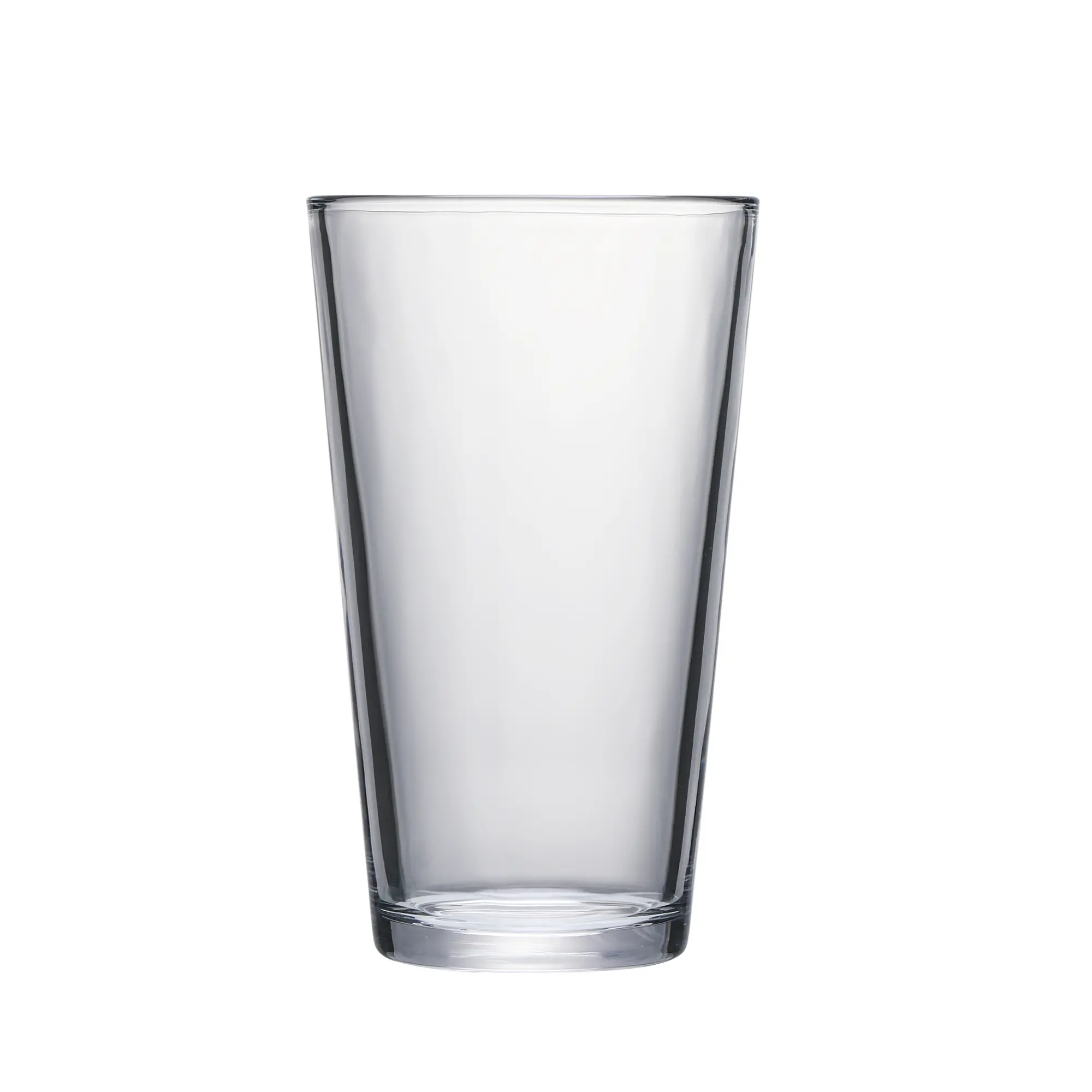
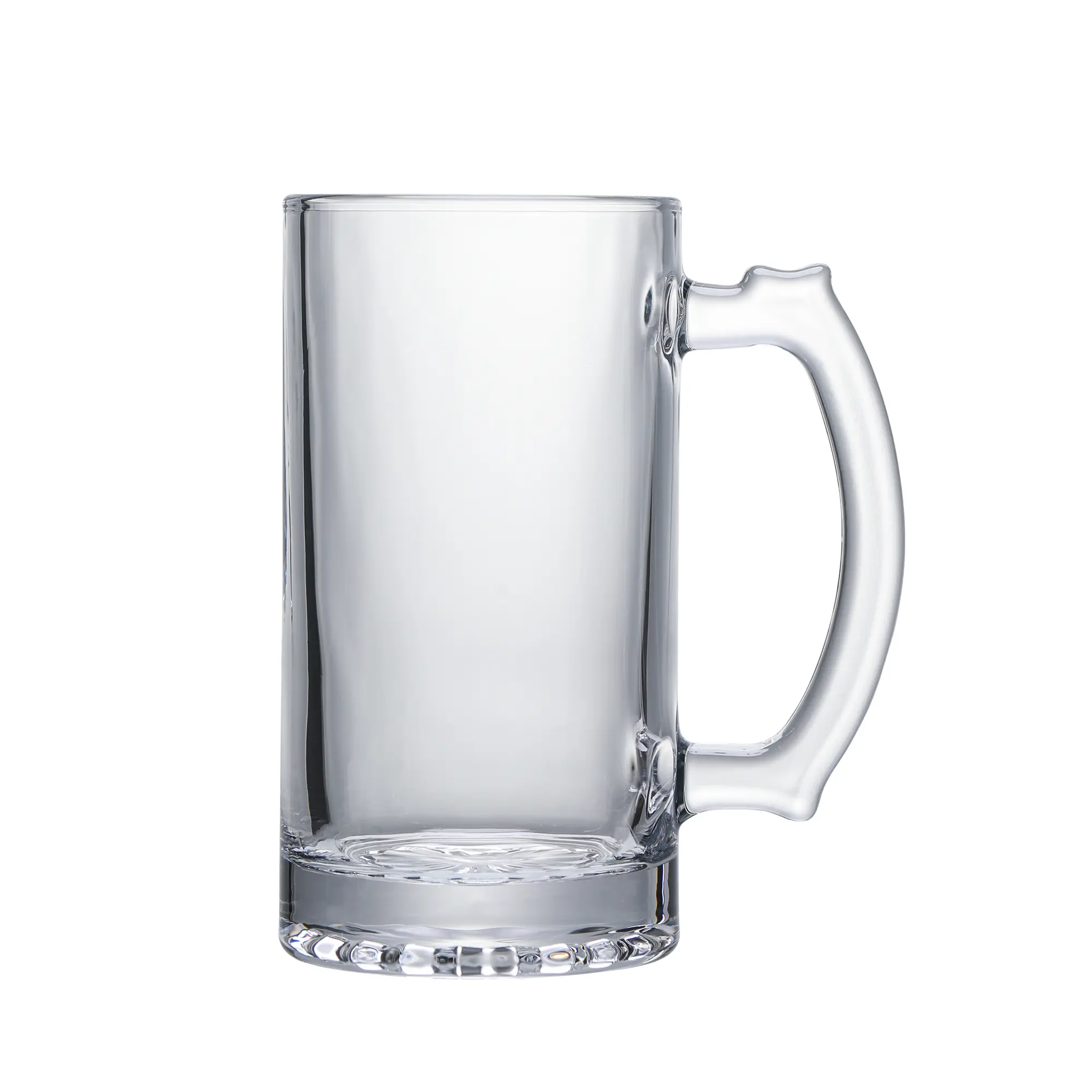
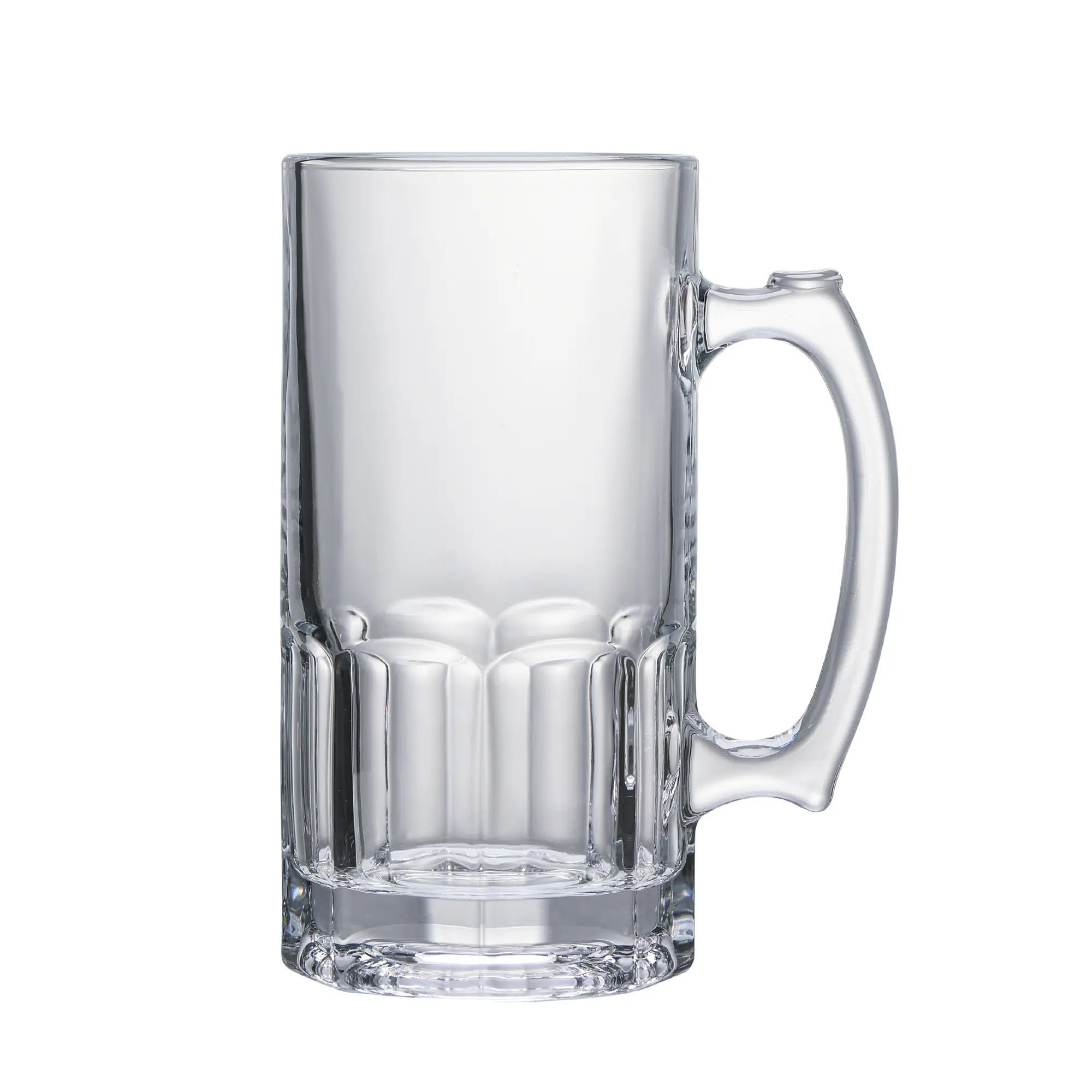
It is widely used for water glasses, juice glasses, tumblers, beer glasses, pub glasses, restaurant drinkware, promotional cups, and cost-effective retail glass sets. In daily use, soda-lime glassware often feels solid and practical, especially when the glass has thicker walls or a heavier base.
However, appearance and weight alone cannot confirm the material. A regular tumbler, beer glass, or juice glass without a heat-resistant label is often soda-lime glass, but product specifications or supplier information are more reliable ways to identify the glass type.
Use cases: water tumblers, juice glasses, beer glasses, pub glasses, restaurant drinkware, promotional cups
Best for: daily-use drinkware, large-volume orders, commercial service, and price-sensitive markets
Avoid if: frequent hot-to-cold switching is expected
Borosilicate Glass — best for heat-resistant drinkware
Borosilicate glass contains boron trioxide, which helps improve resistance to heat and temperature changes. Compared with standard soda-lime glass, it is less likely to crack when used with hot drinks or sudden temperature shifts, making it a common choice for coffee cups, tea glasses, teapots, double-wall glasses, and heat-safe drinkware.
In hand, borosilicate glassware often feels noticeably lighter than a soda-lime glass of a similar size. The wall is usually thinner, and the overall feel is clean and refined. Since borosilicate glass is commonly used for hot beverages, it is often seen in handled coffee cups, tea mugs, heat-resistant glass cups, and double-wall designs.
However, borosilicate glass is not unbreakable. Its main advantage is thermal shock resistance, not impact resistance, so it can still break if dropped, hit, or handled roughly.
Use cases: coffee cups, tea glasses, double-wall glasses, teapots, heat-resistant cups
Best for: hot beverages, temperature changes, lightweight drinkware, and heat-safe glass designs
Avoid if: lowest unit cost, heavy hand-feel, or rough commercial handling is the main priority
Lead-Free Crystal Glass — best for premium drinkware and gift sets
Lead-free crystal glass is known for its excellent clarity, brilliance, and refined appearance. Compared with standard glass, it can make drinkware look brighter and more elegant, which is why it is often used for premium wine glasses, champagne glasses, whiskey glasses, cocktail glasses, decanters, and luxury barware.
For high-end stemware and barware, lead-free crystal is especially valued when it is combined with a thin wall, fine rim, and well-balanced shape. These details help create a more delicate drinking experience and a more premium presentation, making it suitable for hospitality collections, gift sets, and branded drinkware lines.
However, lead-free crystal usually costs more and needs more careful handling and packing. Thin rims, slender stems, and refined shapes can improve the appearance, but they also require stronger packaging and better protection during storage and transport.
Use cases: wine glasses, champagne glasses, whiskey glasses, cocktail glasses, decanters, premium gift sets
Best for: premium drinkware, high-end hospitality, luxury barware, and gift packaging
Avoid if: rough handling, heavy stacking, low-cost positioning, or ultra-low breakage risk is the main priority
How to choose for manufacturing or retail (step-by-step)
- Define primary product goal: cost, thermal performance, or luxury look.
- Match glass type to user behavior (hot drinks → borosilicate; formal dining → crystal).
Also consider how different glass materials are manufactured, as forming methods and wall thickness directly affect durability, weight, and consistency. - Check MOQ and tooling costs: soda-lime tooling is cheapest.
- Test real-world scenarios: dishwasher cycles, freezing, and thermal shock tests.
- Label clearly (e.g., “heat-resistant borosilicate” or “hand-wash recommended for crystal”).
Frequently asked questions
A: Yes. Borosilicate glass has much higher thermal shock resistance, making it safer for hot beverages and sudden temperature changes than soda-lime glass.
A: For commercial use, borosilicate glass generally offers the best balance of heat resistance and durability. Soda-lime is more cost-effective, while crystal prioritizes appearance over toughness.
A: Yes, especially lead-free crystal, but crystal glass is less suitable for frequent thermal stress or heavy handling compared with borosilicate or soda-lime glass.
A: For high-volume manufacturing, soda-lime glass is the most economical option. Borosilicate fits heat-resistant products, while crystal is best reserved for premium or gift-focused lines.
Useful links & internal resources
- External reference on borosilicate properties: Corning Science (search borosilicate glass).
- Internal: See our comprehensive introduction to glassmaking (available in the Process section)
Conclusion
There is no single “winner.” The best glass material for drinkware depends on whether you value cost, thermal durability, or premium appearance.
- Choose soda-lime for affordable mass production
- Choose borosilicate for thermal performance
- Choose crystal (lead-free) for premium products and gifting
Choose based on user needs, test thoroughly, and label product pages clearly to improve discoverability.


